Which is the best month to sell your Locks Heath home?

FlowersI had a Landlord from Park Gate email me the other day. She said she had been following my blog (the Locks Heath Property Blog) for a while and wanted to pick my brain on when is the best time of the year to sell a property. Trying to calculate the best time to put your Locks Heath property on the market can often seem something akin to witchcraft and, whilst I would agree that there are particular times of the year that can prove more productive than others, there are plenty of factors that need to be taken into consideration.

Even if you are putting your property on the market, you don’t know how long it will take to find a buyer – no crystal ball to help with that one. At the moment, the latest set of figures for all 24 estate agents in Locks Heath, show the average length of time it takes to find a buyer for any Locks Heath property is as follows:

Detached                    97  days

Semi                            84  days

Terraced                     80  days

Flat                              121 days

Overall average        100 days

If we roll the clock back to January 2016, the overall average time it took to find a buyer (again using data from all of the 24 Locks Heath Estate Agents) was 120 days.

So, on the face of it, things have vastly improved over the last six months or so. When I looked at the data going back to 2009, and every Spring since then, the average length of time it takes to sell a property drops between January and the Summer months, for it to rise on the run up to Christmas. For example:

Winter 2009 – 191 days           Summer 2009  – 165 days

and in more recent times…

Winter 2013 – 158 days           Summer 2013  – 142 days

Winter 2014 – 119 days           Summer 2014  – 107 days

Winter 2015 – 120 days           Summer 2015  – 106 days
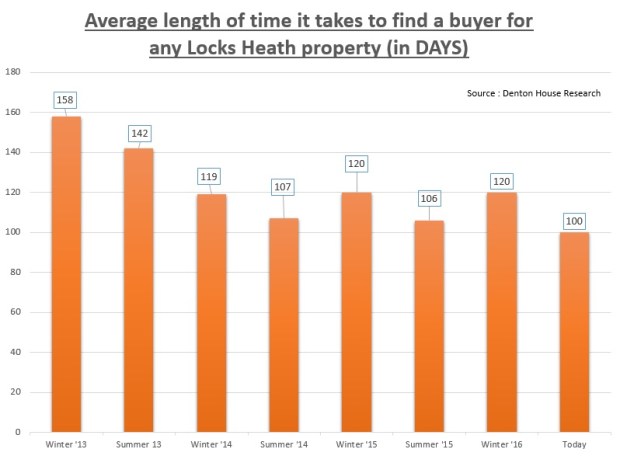
120 Graph

Coming back to the present; Even if you placed your property on the market today in Locks Heath, if it takes you on average a little over fourteen weeks to find a buyer, then you can expect solicitors and the chain to take an additional eight and twelve weeks after that, before you move. It comes down to personal choice as to when you place your property on the market. Children often affect the decision. On one side you might delay putting that for sale board in your front garden so you can move in the summer school holidays, but on the other side, you might want to move sooner to be in the catchment area of a preferred school, in plenty of time for the next academic year.

There are times of the year when it’s better to sell, and times when waiting a little longer can pay off in the long run. In a nutshell, I would say this is the way of the seasons:

Spring: Customarily there are more house-buyers as the Daffodils show themselves

Summer: Sellers may miss out on house-buyers being on holiday

Autumn: The enthusiasm for buying homes returns

Winter: Interest diminishes as festive period looms

What this means to buyers and Landlord investors is that they often pick up a bargain in later months of the year, as there is less competition from owner occupiers. So, whilst there are better months to achieve a quicker sale, the only piece of advice I can give to every home  owner and Landlord in Locks Heath, is do the right thing for yourself, do your homework and buy (and sell) with both your head as well as your heart.

For more thoughts on the Locks Heath Property Market  visit the Locks Heath Property Blog www.thelocksheathpropertyblog.co.uk.
143% Increase in Property Values in Locks Heath since the Millennium

118 - Households in Fareham Constituency Graph

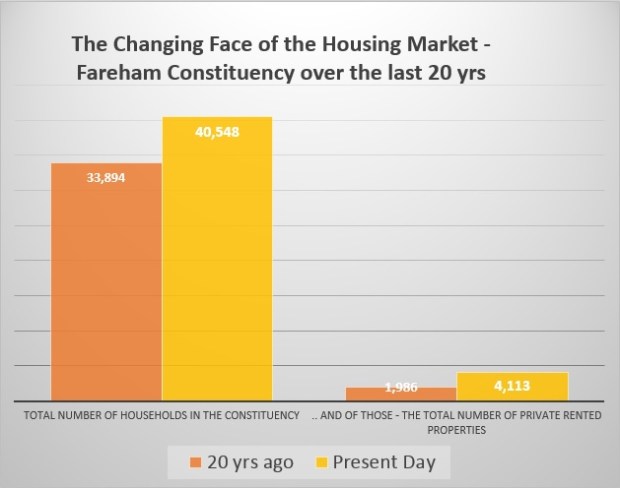
Locks Heath house prices since the Millennium have risen by 143.1%, whilst average salaries in Locks Heath have only grown by 51.27% over the same time frame. This has served to push homeownership further out of reach for many Locks Heath people as they have to battle against raising considerable deposits and meet sterner lending criteria, as a result of new mortgage regulations introduced in 2014/5.  The private rental market in Locks Heath has grown throughout the last twenty years with buy-to-let investors purchasing a high proportion of newly built residential properties that were built and designed for the owner occupier sales markets.  For example, in the Fareham Constituency, roll the clock back 20 years and there were 33,894 properties in the Constituency, whilst the most recent set of figures show there are 40,548 properties – a growth of 6,654 properties.

However, anecdotal evidence suggests that quite a number of those 6,654 were bought by Locks Heath buy-to-let Landlords, as over the same 20-year time frame, the number of rental properties has grown from 1,986 to 4,113 in the Constituency – a rise of 2,127 properties.

Nevertheless, some say this historic growth of the Locks Heath rental market might start to change with the new tax rules for Landlords introduced by Mr Osborne over the last seven or eight months. Yet the numbers tell another story. Across the board, mortgage borrowing climbed to a 9 year zenith in March this year as the British property market’s traditional Easter rush corresponded with Landlords hurrying to beat George Osborne’s new stamp duty changes – buy-to-let Landlords borrowed £7.1bn in March 2016 (the latest set of figures released) which was 163% up on the £2.7bn borrowed in the previous March.

You see, from my point of view, I don’t think things will get worse in the buy-to-let market in Locks Heath and these are the reasons why I believe that:

Firstly, what else are Locks Heath Landlords going to invest in if it isn’t property – the stock market? Since the Millennium, the stock market has risen by an unimpressive total of 5.54%, quite different to the 143.1% rise in Locks Heath property prices?

Secondly, it is true the 3% stamp duty is the first blow on top of a number of other tax changes to be phased in between 2017 and 2021, such as Landlords facing a constraint in their ability to offset mortgage interest and, if sizeable numbers of Landlords do take the decision to sell their portfolios, this will lead to a substantial amount of second hand properties being put up for sale. Yet that might not be a bad thing, as I have mentioned in previous articles there is a serous shortage of properties to buy at the moment in Locks Heath: the stock of property for sale being at a six year all time low.

Thirdly, if there are fewer rental properties in Locks Heath, as supply drops and demand remains the same (although ask any letting agent in Locks Heath and they will say demand is constantly rising) this will create a squeeze in the Locks Heath rental market and as a result rents will rise. In fact, I predict even if Landlords don’t sell up, Locks Heath rents will rise as Locks Heath Landlords seek to compensate for increased costs, which means more Landlords will be attracted back.

For more thoughts on the Locks Heath Property market you might find the Locks Heath Property Blog of interest www.thelocksheathpropertyblog.co.uk.

Asking Prices of Locks Heath Property up 1% since December

1% Since December_edited-1I had an interesting question the other day from a homeowner in Park Gate who asked me the difference between asking prices and values and why it mattered. When it comes to selling property, there must be agreement between the purchaser (buyer) and seller (vendor) for a property sale to take place. The value a buyer applies to a property can massively differ from the value a seller or mortgage company places upon it. The seller, the buyer and the mortgage company must find an agreeable value to assign to a property so the sale can proceed.

In many of my articles about the Locks Heath property market, I talk about values, i.e. what property in Locks Heath actually sells for, but I haven’t spoken about asking prices for a while. Now asking prices are important as they are one of the four key matters a potential buyer will judge your property on (the others being location, bedrooms and type). Price yourself too high and you will put off buyers. So let’s take a look at the Locks Heath numbers.

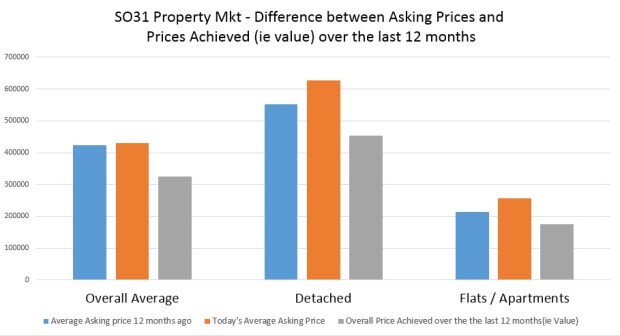
Over the last 12 months asking prices (i.e. the price advertised in the paper and on Rightmove) in the SO31 area have increased by 19%, taking the average asking price in Locks Heath to £429,000 (up from £423,000 twelve months ago).

Interestingly though, when we look at, say detached property and flat/apartments, a slightly different picture appears. Twelve months ago, the average asking price for a detached house in the Locks Heath area was £551,400 and today its £626,100 (a rise of 14%); whilst over the same 12-month period, the average asking price of a flat/apartment was £213,500 a year ago, and today its £257,600 (a rise of 21%).

However, my research shows that the supply of property for sale in Locks Heath is beginning to increase. In December 2015, there were 255 on the market in Locks Heath today there are 276 properties on the market (up 8%). This will mean homeowners looking to sell will need to be conscious of how their property compares against others on the Locks Heath property market. The Locks Heath property market still has substantial momentum and sufficient demand remains to provoke more modest asking price rises. This noteworthy increase in supply since Christmas is currently providing more choice for buyers and is tempering asking price rises – and here is the devil in the detail – only 1% of the overall 19% annual figure (mentioned in para 3) has appeared since December.

… And here is the second point to make. Asking prices are one thing, but what a property sells for (i.e. value) is a completely different matter. These are the average prices achieved (i.e. what they sold for or the average value) for property in Locks Heath over the last 12 months…

  • Overall Average £325,700
  • Detached £453,300
  • Flat/Apartment £175,900

Asking Prices Vs Achieved Prices Graph

You can quite clearly see, there is a difference between what people are asking for property and what it is selling for. The underlying fundamentals of low interest mortgages and tight supply remain prevalent in the Locks Heath property market however, the number one lesson has to be this … if you want to sell, be realistic with your pricing.

For more articles like this please visit the Locks Heath Property Blog www.thelocksheathpropertyblog.co.uk.

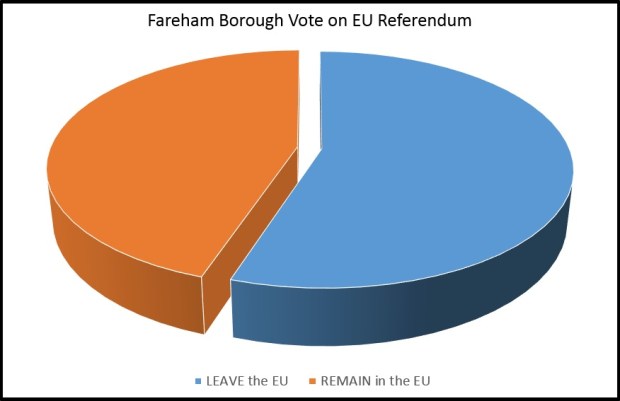
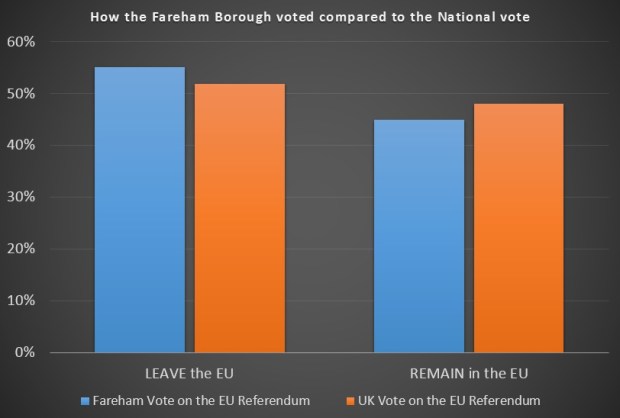
55.1% of Fareham Voters voted to leave the EU – What now for the 16,279 Locks Heath Landlords and Homeowners?

Brexit Pie ChartBrexit Vote Graph

We all woke this morning to the news that the UK will be leaving the EU. As most of the polls suggested a Remain Vote, it came as a surprise to most people, including the City. The Pound dropped 6% this morning after the City Whiz kids got their predictions wrong and MP’s from the Remain camp are using words like “challenging times ahead”.

… and now the vote has been made… what next for the 13,980 Locks Heath homeowners – especially the 7,619 of those Locks Heath homeowners with a mortgage?

The Chancellor in the campaign suggested property prices would drop by 18%. Using Treasury estimates, their method of calculating this was tenuous at best, but focused around the abrupt and hasty increase in UK interest rates, which in turn would raise the cost of mortgages, and therefore lower demand for property, causing a drop in property prices.… and I would say, yes… that will probably happen.

Locks Heath Property Values

Locks Heath property values will probably drop in the coming 12 to 18 months – but by 18%? I am sorry, I find that a little pessimistic and believe that figure was rhetoric to get homeowners and landlords to vote in a particular way. But the UK property market is quite a monster.

Since the last In/Out EU Referendum in June 1975, property values in Locks Heath have risen by 1,891.1%

(That isn’t a typo) and whilst property prices did drop nationally by 18.7% between the peak of 2007 and bottom of the market in 2009, when one compares property values today in the country, compared to that all-time high of 2007, (the period before the financial crisis of the Credit Crunch of 2008/9)… they are still up 10.14% higher.

Another Credit Crunch?

And so, notwithstanding the Credit Crunch, the worst global economic outlook since the 1930s and the recession it brought us, a matter of a few years later, the Government were panicking in 2012/3/4 that the housing market was a runaway train.

Now the same Credit Crunch doom-mongers and sooth-sayers that predicted soup kitchens in 2008/9 are predicting Brexit meltdown. Bad news sells newspapers. Stock markets may rise, stock markets may fall, yet the British public continued to buy property in 2009/10 and beyond. Aspiring first time buyers and buy to let landlords dusted themselves down, took a deep breath and carried on buying… because us Brit’s love our Bricks and Mortar – we need a roof over our head.

However, as mentioned previously, if the value of the pound drops, in the past UK Interest Rates have risen to reverse that drop. However, whilst a cheaper pound will make your pint of Sangria a little more expensive on your Spanish holiday this year and make your brand new BMW pricier… it will make British export cheaper! Which is great for the economy.

Interest rates

So what about interest rates? Since 2009, interest rates have been at 0.5% and lots of people have become accustomed to those sorts of levels. So what if interest rates rise… end of the world? Interest rates in the 1986/88 property boom were on average 9.25%, the 1990’s they were on average around 6.5% and uber-boom years (when UK property values were rising by 20% a year for three or four straight years across the UK)… 4.5%. Many of you reading this who are in their 50’s and older will remember interest rates at 15%.

But I suspect interest rates won’t rise that much anyway, as Mark Carney (Chief of the Bank Of England) knows, raising interest rates causes deflation – which is the last thing the British economy needs at the moment. In fact they have been printing money (aka Quantitative Easing) for the last few years (which causes inflation) to the tune of £375bn a month. A bit of inflation because the pound has slipped on the money markets (not too much mind you) might be a good thing?

… Because whilst property values might drop in the country, they will bounce back. It’s only a paper loss… because it only becomes real if you sell. And if you have to sell, again as most people move up market when they sell, whilst your property might have dropped by 5% or 10%, the one you want to buy would have dropped by the same 5% to 10%… and here is the best part – (and work your sums out) you would actually be better off because the more expensive property you would be purchasing would have come down in value (in actual pound notes) than the one you are selling.

The Locks Heath landlords of the 4,701 Locks Heath buy to let properties have nothing to fear neither, nor do the 11,612 tenants living in their properties. Buy to let is a long term investment. I think there might even be some buy to let bargains in the coming months as some people, irrespective of evidence, panic.  Even if we pull up the drawbridge at Dover and immigration stopped today, the British population will still increase at a rate that will exceed the current property building level. Britain is building 139,600 properties a year, but needs according to the eminent ‘Barker Review of Housing Supply Report’, the country needs to build about 250,000 properties a year to even stand still, and as the birth rate is increasing, the population is living longer and just under a quarter of all UK households now are occupied by a single person demand is only going up whilst supply is stifled. Greater demand than supply equals higher prices. That is definitely a fact.

So, what will happen next?

Well, there are many challenges ahead. The country has spoken and we are now in uncharted territory – but we have been through a couple of World Wars, an Oil Crisis, Black Monday, Black Wednesday, 15% interest rates and a Credit Crunch … and we survived!

And the value of your Locks Heath property? It might have a short term wobble… but in the long term -it’s safe as houses regardless.

56.1% of Locks Heath Tenants are White Collar Middle Class

White collarWith Locks Heath youngsters not able to buy their own property, my research would suggest the progressively important role the private rented sector has been playing in housing people in need of a roof over their head. Especially at a time of increasing affordability problems for first time buyers and growing difficulties faced by social housing providers (local authorities and housing associations) in their ability to secure funding from Westminster and then compete against the likes of the Taylor Wimpey’s and Miller’s of this world to buy highly priced building land.

Renting isn’t like it was in the 1960’s and 70’s, where Tenants couldn’t wait to leave their rack-rent Landlords, charging sky-high rents for properties with Second World War wood chip wallpaper, no central heating and drafty windows. Since 1997 with the introduction of buy to let mortgages and a new breed of Locks Heath Landlord, the private rented sector in Locks Heath has offered increasingly high quality accommodation for younger Locks Heath households.

So whilst I knew in my own mind that the type and class of Tenant has improved over the last 20 years, I had nothing to back that up… until now. According to some detailed statistics from Durham University just released, for the Fareham Borough Council area, the current situation regarding social status of Tenants shows some very interesting points. Using the well known Demographic ABC1 grade classifications which refers to the social grade definitions (which describe, measure and classify people of different social grade and income and earnings levels, for market research, social commentary, lifestyle statistics, and statistical research and analysis) this is what I found out.

Of the 6,653 Tenants who live in a private rented property in the Fareham Borough Council area, 20.70% (or 1,377) of those Tenants are classified in the AB category (AB Category being Higher and intermediate managerial / administrative / professional occupations), compared to 28.63% owner occupiers who own their property without a mortgage or 4.18% who rent their property from the local authority. Fascinating don’t you think?

Looking at the C1’s (C1’s being the Supervisory, clerical and junior managerial / administrative / professional occupations), of the already mentioned 6,653 Tenants in the area, an impressive 2,358 of them are considered to be in the C1 category (or 35.44%). Again, when compared with the owner occupiers who own their property without a mortgage, that figure stands at 34.54% and 18.36% who rent their property from the local authority.  So, if we use the conventional measurements recorded by the white-collar “ABC1” i.e. middle class….

This means 56.14% of Tenants are considered middle class in Locks Heath

I could go through all of the social categories through to ‘E’, but I don’t want to bore you with too many numbers. The fact is that private Tenants are moving up the social ladder and whilst back in the 1960’s and 70’s, the private rented sector in Locks Heath (and the rest of the UK) has customarily been viewed as a temporary tenure for 20 somethings before they bought a property, the increase in renting in Locks Heath, which I have talked about many times in the Locks Heath Property Blog may be a reflection of increasing difficulty for this group in accessing other tenures, but may also be a reflection that people nowadays choose to rent long term instead?

Locks Heath Landlords need to be aware that Tenants now demand more from their properties, the agent and their Landlord and whilst affordability for first-time buyers and tighter controls on lending may mean that potential first-time buyers are in the private rented sector for longer, they will still pay ‘top dollar’ rent for a ‘top dollar’ property.

For more articles like this please visit the Locks Heath Property Blog www.thelocksheathpropertyblog.co.uk.

The Locks Heath Property Market and The Euro 2016 Football Tournament

Euro 2016With the Referendum on EU membership on the horizon our households now also have something European to concentrate on that doesn’t involve party political broadcasts or politician’s treating us all like children – the Euro 2016 Football Tournament. Locks Heath is home to all different backgrounds and nationalities so if you’re not lucky enough to be jetting off to France for the UEFA Euro 2016 football tournament, have no fear! For a bit of fun I have taken a look at which European people live in Locks Heath so you know who to soak up the best atmosphere with!
During my research some interesting numbers appear. Going into the Euro 2016 tournament, France were 3/1 favourites, then Germany 7/2, third Spain 11/2, then England 9/1, Italy 16/1, Poland 50/1, Romania and Wales at 100/1, Ireland at 150/1 and Northern Ireland 500/1 (although Leicester were 5000/1 at the start of last season).

Of the 97,504 residents of the Fareham Constituency, of the Home Nations going into the competition, 88,030 of them are from England, 1,288 from Wales, 459 from Northern Ireland and 378 from Ireland, although I do feel sorry for the 2,140 Scots who didn’t get into the finals. Now interestingly, looking at the Mainland Europeans residents in the Fareham Constituency, it might not surprise you that they make up 1.98% of the population as a whole in the Fareham Constituency.

However, even more fascinating, of those 1.98% European’s residents, 1.18% are from Western Europe because EU residents from Eastern Europe – i.e. the Accession Countries to the EU between 2003 to 2007 (Czech Republic, Estonia, Latvia, Lithuania, Hungary, Poland, Slovakia, Slovenia, Bulgaria and Romania) – only make up 0.79% of the population of the Fareham Constituency.

Broken down into the relevant football teams, in the Fareham Constituency there are:

151 French people                                                                                                                                         534 Germans                                                                                                                                                         64 Italians                                                                                                                                                         84 Spanish                                                                                                                                                     229 Poles                                                                                                                                                           39 Romanians

But what does this have to do with the Locks Heath property market? Quite a lot in fact. Many of these European people were economic migrants, especially those from Eastern Europe. There is no preferential treatment for council housing in Locks Heath, so EU migrants have in fact increased demand for privately rented accommodation in Locks Heath.

This has meant, as demand for housing in Locks Heath has remained strong, Locks Heath Landlords have continued to buy properties to rent out to keep up with this demand. Therefore, the value of every homeowner’s property in Locks Heath has been kept high because of the demand from these Locks Heath Landlords buying starter homes to rent out, releasing existing homeowners to go up the property ladder – benefiting everyone in the chain.

However, rents have remained relatively subdued; in Locks Heath rents are only 20.1% higher than they were in 2005, not bad when you consider we have had 38.52% inflation in the UK economy as a whole over the same 11 years.

EU migration has meant existing homeowners, Landlords and the economy as a whole in Locks Heath (and the UK) have benefitted from better economic conditions, property prices not slumping whilst rents have been kept in check by wage inflation. Now I wonder who will win the footy? Back to the TV!

For more thoughts on the Locks Heath property market like this – visit the Locks Heath Property Blog www.thelocksheathpropertyblog.co.uk.

Proposed new development in Warsash

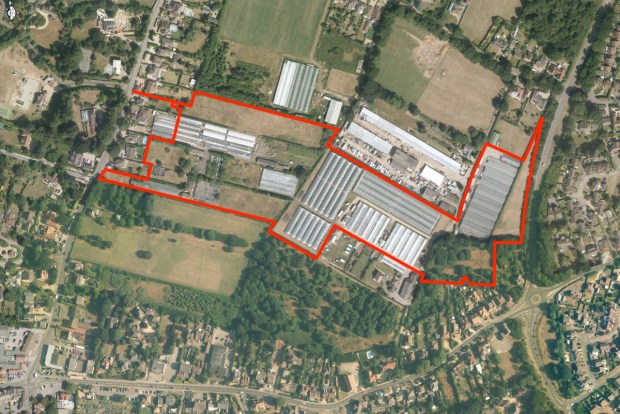
I know that planned developments and new houses in the area are of interest to my readers so I thought that I would let you know about a development that I have recently been looking at that is planned in Warsash.  Land & Partners are the promoters of the site which is situated south of Greenaway Lane and north of Warsash Road.

Site

Land & Partners are holding a public exhibition in the Bartholomew Room at the Victory Hall, Warsash on Thursday 16th June (4.30pm until 7.30pm) to outline plans for Chapelfield Park.

Land & Partners Ltd will be making a planning application shortly for around 200 homes, public open space, a care home and custom build plots.

This site brings together a number of parcels of land that have a history of commercial use for fruit production. The area is not subject to any strategic gap planning policy constraints and it is very enclosed.

Their proposals include:

  • A variety of housing types and tenures, including retirement housing, starter homes and affordable housing
  • Opportunities for locals to customise the design of their own home
  • Enhancement of the natural environment and biodiversity, linked to the creation of open water features
  • Areas of public open space
  • Care home (about 70 bed spaces) for the elderly

More information on the site can be found at http://chapelfieldpark.tumblr.com/.

7.08% Drop in Hampshire Property Transactions

falling rocksIn this post credit crunch world of sub terrain low interest and annuity rates so low a limbo dancer would smart, the growth of buy to let since 2009 has been phenomenal. So much so, there has been an evolution in purchase of property in the UK from that of just buying the roof over one’s head to that of a buy to let investment where it is seen as a standalone financial asset to fund current and future (ie pensions) investment. So recently, a few days before the release of latest Land Registry data of property transactions, quite a few market commentators were anticipating a huge increase in the number of properties sold in January as the 1st of April 2016 stamp duty deadline got closer.

Looking at the most recent set of data from The Land Registry, it seems there has been a drop in the number of completed property sales in the Hampshire County Council area. Year on year, completed property sales in January (the latest set of data released) fell by 7.08% to 1,509 compared with 1,624 in January 2015. Nationally, the number is similar, as the number of completed house sales fell by 5% in January 2016 compared with January 2015. Some might say this counters the reports that there was a rush by landlords to buy ‘buy to let’ property ahead of the 1st April 2016 deadline but where was the stampede that many expected?

Looking even closer to home, in the SO31 postcode in January 2016, 58 properties changed hands, whilst 72 properties did so in January 2015. It’s even more interesting when you look at the average price paid, in January 2016, it was £376,310 yet in January 2015, the average price paid was £320,805.

Is the buy to let dream over for Locks Heath landlords?

… but as ever my Locks Heath Property Blog readers, the devil is in the detail. The 3% stamp duty surcharge for buy to let landlords was announced in the Autumn Statement on the 25th November 2015. Anyone who has bought a property knows from their offer being accepted to receiving the keys and monies paid is a long drawn out affair, taking on average 8 to 12 weeks, as the Land Registry only get notified upon completion of the sale. We also need to factor in that Solicitors seem to have the last two weeks of December off anyway.

So if there was a rush in the last few days of November/early December in the Locks Heath property market, we would only see the results of that in the February figures (released in June) and more probably March’s (released in July).

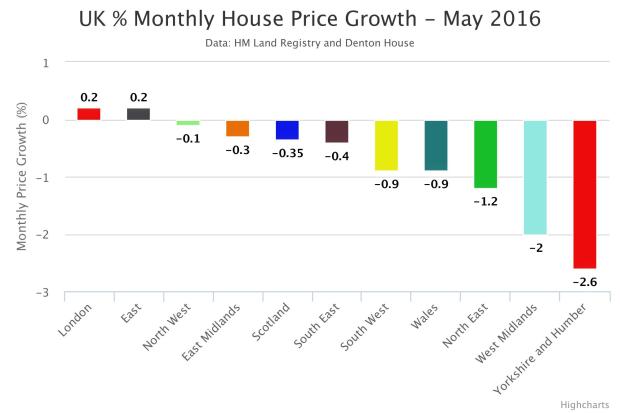
So why all the doom and gloom? Simple – bad news sells newspapers and gets the headlines. Let’s be honest, the headline to this article is designed to be eye catching. However, when we look at both the bigger and smaller picture; nationally, property values dropped (month on month) by 0.5%; in the South East region they dropped 0.4%, whilst in Hampshire they rose by 0.9%. The year on year figures tell a completely different story to that.

atawym_1-2

It just goes to show you should look deeper into something before making a judgment! For more thought provoking commentary on the Locks Heath property market – please visit the Locks Heath Property Blog www.thelocksheathpropertyblog.co.uk.

1,010 Fareham Properties lie empty– An injustice for the 1,251 people on the Fareham Council House Waiting List?

CrowdEasy problems should have easy solutions  – shouldn’t they?

Problems like Locks Heath’s housing crisis, where we have a rudimentary numerical problem of too few homes for too many people. The answer is clearly to build more property in Locks Heath – but that, unfortunately for those desperately seeking to purchase or let a property, takes a lot of time and huge amounts of money. So what about other solutions?

Whilst at a dinner with friends recently, the subject of property was mentioned (as I am sure it does at most dinner parties up and down the country). Normally someone always mentions empty properties as the solution to the problem. On the face of it, it seems so obvious. Now quite interestingly, I had recently done some research on this topic, which I want to share with you.

The most recent set of figures from 2015 state there are 1,010 empty homes in the Fareham Borough Council area. So it begs the question … why not put them back onto the system and help ease the Locks Heath housing crisis? Whilst they stand empty, 1,251 Fareham households (not people – households) are on the Council House Waiting List for council houses. Surely, we can undoubtedly all agree that property left empty for years and years isn’t morally right with the burgeoning Council House Waiting List, not to also mention the issue of homelessness.

But a different story emerges when you look deeper into the numbers. Of those 1,010 homes lying empty, only 117 properties were empty for more than six months. The local authority has to report a property being empty, even if it’s for a week. So many of the Locks Heath properties are either awaiting new homeowners or, in the case of rental properties, new Tenants. Also most certainly, some properties are being refurbished and renovated, while others properties have homeowners who are anxious to sell but cannot find a buyer.

And this is where its gets even more interesting. Of the 117 long-term vacant properties (those empty more than six months), 25 belong to the council. However, before we all go Council-bashing, evidence suggests these empty council houses are habitually in need of so much restoration that it’s not worth the Council’s while to do and are in the roughest parts of the council estates, they are properties that even the Council find difficult to fill.

The fact is that the number of genuinely long term empty properties is only a tiny drop in the ocean of the 46,579 properties in the area covered by Fareham Borough Council and, even if every one of those empty homes were filled with happy cheerful Tenants tomorrow, it would only meet a small fraction of Locks Heath housing needs.

So what does this mean for all the homeowners and Landlords of Locks Heath? Well it means with demand being so high, especially for rental properties, the certainty of the rental market growing is an inevitability because young people cannot buy and councils don’t have the money to build new council houses. This in turn bolsters property prices as Landlords continue to buy at the lower end of the market (starter homes, etc), which in turn sustains the rest of the market as those sellers move up the property ladder, releasing others in turn to buy on again.

These are interesting times in the Locks Heath property market!

£6,300 boost to Locks Heath First time buyers

entrepreneur-1103719_1920

There’s a whole legion of wannabe Locks Heath first time buyers keen to get on the property ladder and they now have a 3% price advantage over the previously quicker responding army of Locks Heath Landlords with cash at the ready.  Since the start of April, buy to let landlords have had to pay an additional 3% stamp duty so whilst demand from some Locks Heath buy to let Landlords has dropped away, in the interim, it offers Locks Heath first time buyers (FTB’s) a chance to fill the vacuum with less competition from cash rich Landlords (over two thirds of BTL properties were purchased without a mortgage in the last 7 years) who could bid more and complete quicker.

Looking at the average value of a terraced house in Locks Heath currently standing at £212,700, that means if our Locks Heath FTB went up against a Locks Heath Landlord, the Landlord would have to pay an additional £6,381 in stamp duty.  Early evidence from fellow property professionals in the suburb is suggesting Landlords are reducing their offers slightly on Locks Heath properties to reflect the extra stamp duty.

Whilst on the face of it, it appears Landlords are being punished by No.11 Downing Street, I actually believe this increase in stamp duty for Landlords is a good thing for the Locks Heath property market as a whole.

Since 2011/12, the Locks Heath property market has performed very well indeed.  Over the last 12 months, £63,395,545 has been spent buying 215 Locks Heath properties.  Figures from the Land Registry have just been released and month on month in our council area, property values are 0.9% higher, yet 8.4% higher year on year.  These figures are nowhere near the heady days of 2003 (April to be exact), when Locks Heath property prices rose by 22% in 12 months.

So as property values in Locks Heath (and the UK as whole) start to stablise and come back to some kind of balance, I am beginning to see savvy Landlords view the Locks Heath property market in a different light.  Even with the Spring rush, gone are the days where you could make limitless money on anything that had a door, a few windows and roof.  This stamp duty change has made more and more Landlords, after reading the Locks Heath Property Market Blog www.thelocksheathpropertyblog.co.uk take advice on what or what not to buy and what to pay, meaning Locks Heath Landlords are being more calculated with their Locks Heath BTL purchases.  I am also seeing a variance between relatively brisk current price momentum and softer expectations in terms of property value growth in Locks Heath, this in part reflects amplified uncertainty about the short term economic outlook (eg Brexit, Issues in the Far East etc).

Now I know a lot of Locks Heath Landlords brought forward their BTL purchases to beat the stamp duty deadline.  However, it is probable that hunger from Locks Heath investors will return for the right Locks Heath property later in the year, especially if it’s at the right price and offers a decent yield.  However, in the meantime, Locks Heath FTB’s could and should, in the short term, make hay whilst the sun shines, plug the gap and grab a bargain!