
 As the dust starts to settle on the various unread General Election party manifestos, with their ‘bran-bucket’ made up numbers, life goes back to normal as political rhetoric on social media is replaced with pictures of cats and people’s lunch. Joking aside though, all the political parties promised so much on the housing front in their manifestos, should they have been elected at the General Election. In hindsight, irrespective of which party, they seldom deliver on those promises.
Housing has always been the Cinderella issue at General Elections. Policing, NHS, Education, Tax and Pensions etc., are always headline grabbing stuff and always seem to go ‘the ball’. However, housing, which affects all our lives, always seems to get left behind and forgotten.
Nonetheless, the way the politicians act on housing can have a fundamental effect on the wellbeing of the UK plc and the nation as a whole.
One policy that comes to mind is Margaret Thatcher’s Council House sell off in the 1980’s, when around 1.4m council houses went from public ownership to private ownership. It was a great vote winner at the time (it helped her win three General Elections in a row) but it has meant the current generation of 20 somethings in Locks Heath (and elsewhere in the Country) don’t have that option of going into a council house. This has been a huge contributing factor in the rise of the private renting and buy to let in Locks Heath over the last 15 years.
Nevertheless, looking back to the start of the Millennium, Labour set the national target for new house building at 200,000 new homes a year (and at one point that increased to 240,000 under Gordon Brown for a couple of years). In terms of what was actually built, the figures did rise in the mid Noughties from 186,000 properties built in 2004 to an impressive 224,000 in 2007 (the highest since the early 1980’s) as the economy grew.
Then the Credit Crunch hit. It is interesting, that the 2010 Cameron/Clegg government did things a little differently. The fallout of the Credit Crunch meant a lot less homes were built, so instead of tackling that head on, the coalition side-stepped the target of the number of new homes to build and offered a £400m fund to help kick start the housing market (a figure that was a drop in the ocean when you consider an average UK property was worth around £230,000 in 2010). The number of new houses being completed dipped from 146,800 in 2011 to 135,500 the subsequent year.
So, one might ask exactly how many new homes do we need to build per year? It is commonly accepted that not enough new properties are being built to meet the rising need for homes to live in. A report by the Government in 2016, showed that on average 210,000 net additional households will be formed each year) up to 2039 (through increased birth rates, immigration, people living longer, lifestyle (i.e. divorce) and people living by themselves more than 30 years ago). In 2016, only 140,600 homes were built… simply not enough!
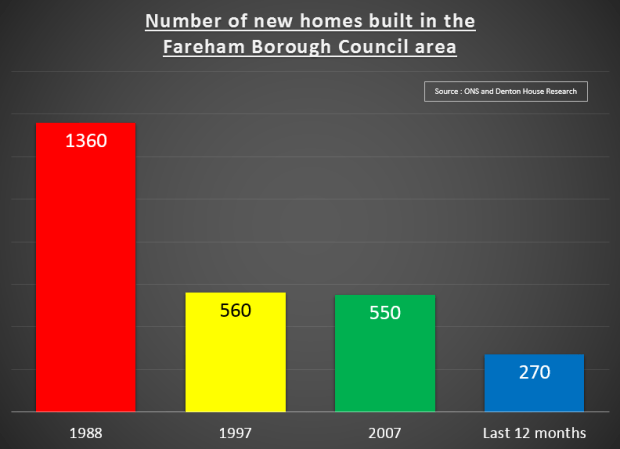
Looking at the numbers locally in Locks Heath and the surrounding area, contrary to local belief, we as an area, are not pulling our weight either when it comes to building new homes. In the 12 months up to the end of Q1 2017, only 270 properties were built in the Fareham Borough Council area. Go back to 2007, that figure was 550, 10 years before that in 1997, 560 new homes and further back to 1988, 1,360 new homes were built.
Who knows if Teresa May’s Government will last the five years? She will think she has bigger fish to fry with Brexit to get bogged down with housing issues. But let me leave you with one final thought.
The conceivable rewards in providing a place to live for the public on a massive house building programme can be enormous, as previous Tory PM’s have found out. Winston Churchill in 1951, asked his Minister for Housing (Harold Macmillan) if he could guarantee the construction of 300,000 new properties a year, he was notoriously told: “It is a gamble—it will make or mar your political career, but every humble home will bless your name if you succeed.”
Isn’t it interesting, that the Tories remained in power until 1964! Mrs May will have to work out if she wants to be the heiress to Harold Macmillan or David Cameron.
 According to my research, of the 18,587 properties in Locks Heath, 8,378 of those properties have mortgages on them. 90.9% of those mortgaged properties are made up of owner-occupiers and the rest are buy to let landlords (with a mortgage).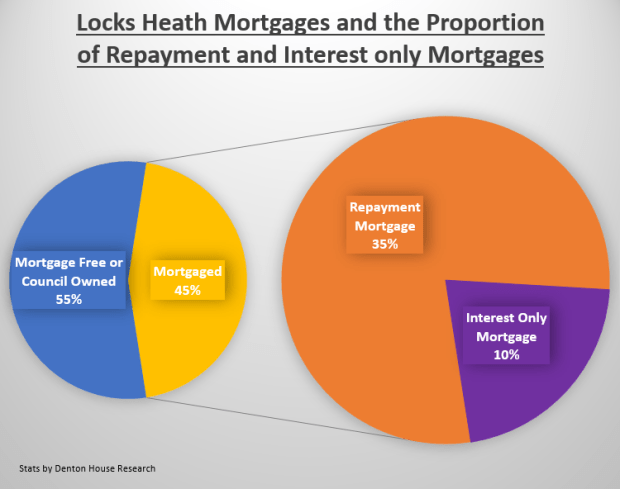
 Well last week’s article “The Unfairness of the Locks Heath Baby Boomer’s £3,373,900,000 windfall?” caused a stir. In it we looked at a young family member of mine who was arguing the case that Millennials (those born after 1985) were suffering on the back of the older generation in Locks Heath. They claimed the older generation had seen the benefit of the cumulative value of Locks Heath properties significantly increasing over the last 25/30 years (which I calculated at £3.37bn since 1990). In addition many of the older generation (the baby boomers) had fantastic pensions, which meant the younger generation were priced out of the Locks Heath housing market.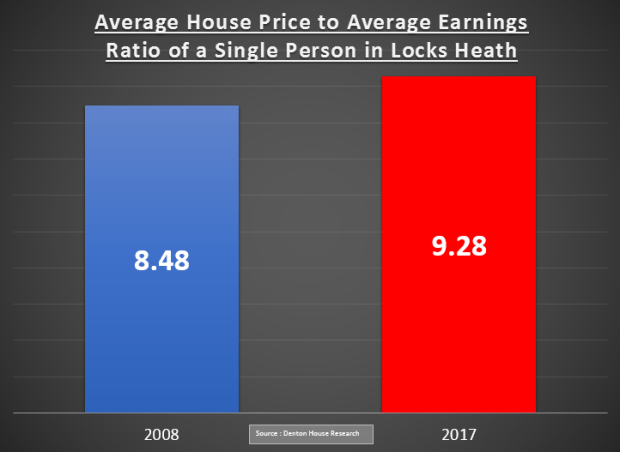
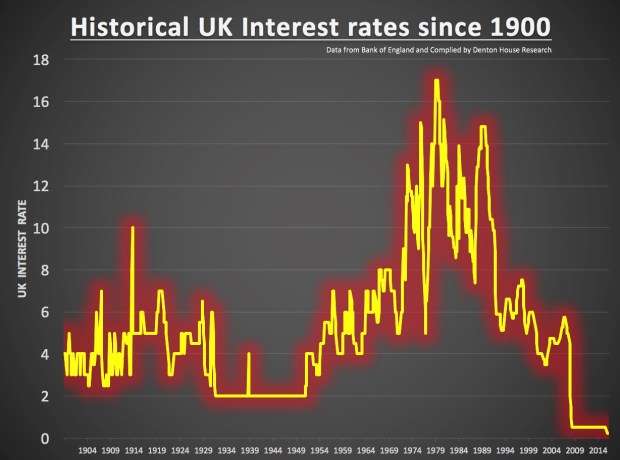
 Recently I was having a chat with one of my older relatives at a big family get-together. We and a couple of their children got talking over a drink about the times of 15% interest rates and how the more mature members of our family had to endure the 3 day week, 20% inflation and the threat of nuclear annihilation in 4 minutes. So, foolishly, my older relative said what with all the opportunities youngsters had today, they had never had it so good!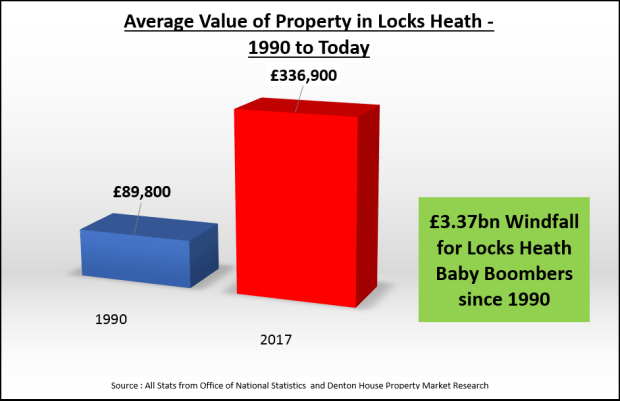
 On several occasions over the last few months, in my Locks Heath Property Blog, I predicted that the rate of rental inflation (i.e. how much rents are rising by) had eased over the last year. At the same time I felt that in some parts of the UK rents had actually dropped for the first time in over eight years. Recent research backs up this prediction.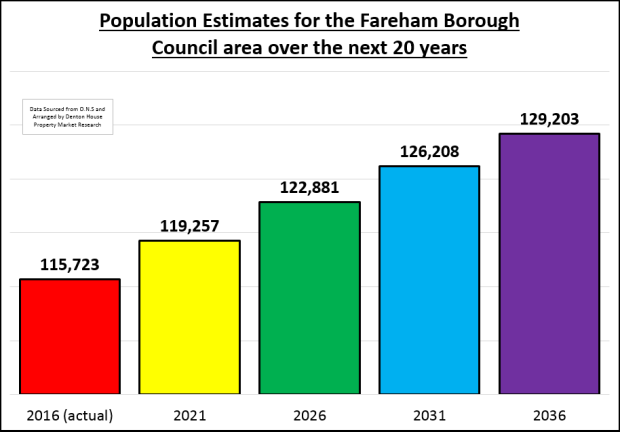
 50 years ago, in 1967, the first human heart transplant was performed by Dr Christian Barnard in South Africa. In the same year Sweden switched from driving on the left-hand side to the right-hand side of the road. The average value of a Locks Heath property was £4,845, interest rates were at 5.5% and The Beatles released one of my favourite albums – their Sgt Pepper album… but what the hell has that to do with the Locks Heath property market today?? Quite a lot actually… so with my music turned up loud, let me explain my friends!
 In November 2015 George Osborne disclosed plans to restrain the buy-to-let (BTL) market, implying its growing attractiveness was leaving aspiring first time buyers contesting with Landlords for the restricted number of properties on the market. One of things he brought in was that tax relief on BTL mortgages would be capped, starting in April 2017. Before April 2017, a private Landlord could claim tax relief from their interest on their BTL mortgage at the rate they paid income tax – (i.e. 20% basic /40% higher rate and 45% additional rate).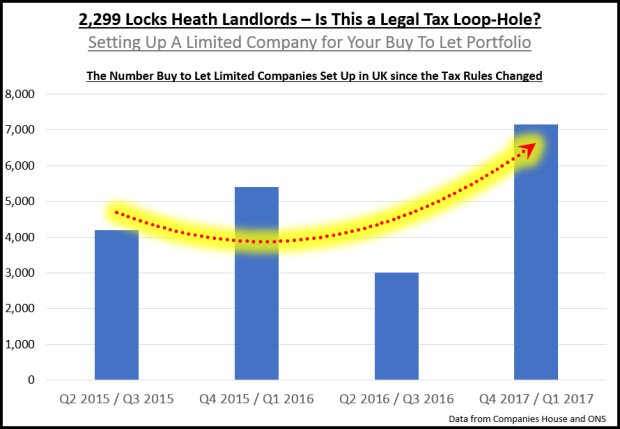
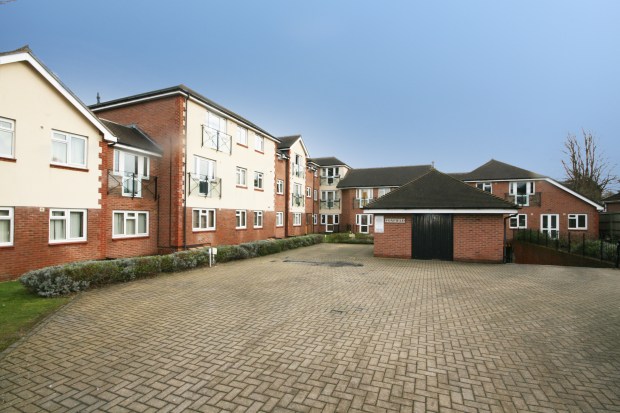
 Should you buy or rent a house? Buying your own home can be expensive but could save you money over the years. Renting a property through a letting agent or private Landlord offers less autonomy to live by your own rules, with more flexibility if you need to move.
 thelocksheathpropertyblog.co.uk