
 Well, the fallout from the recent Budget is still continuing. I was chatting to a couple of movers and shakers from the Locks Heath area the other day, when one said, “There isn’t enough land to build all these 300,000 houses Philip Hammond wants to build each year”.
…and if you read the Daily Mail, you would be forgiven for thinking the Country was at bursting point…
… or is it?
It was 60 years ago the first satellite was launched (Sputnik). All the Superpowers have used them to take high definition pictures of each other for decades, but now satellites and their high-powered cameras are being used for more peaceful purposes. The European Environment Agency (EEA) have been taking high definition pictures of the UK from outer-space to give us a focused picture of what every corner of the Country really looks like… and the findings will come as a surprise.
As my blog readers know, I always like to ask the important questions relating to the Locks Heath property market. If you are a Locks Heath Landlord or Locks Heath homeowner, this knowledge will enable you to make a more considered opinion on your direction and future in the Locks Heath property market. Like every aspect of all economic life it’s all about supply and demand, because over the last twenty or so years there has been an imbalance in the British (and Locks Heath) housing market. With demand outstripping supply it means that the average value of a property in Fareham has risen by 344.41%, taking an average value from £64,400 in 1995 to £286,200 today.
Using the information from the EEA and data crunched by Sheffield University with their Corine-Land Cover project, I posed them a few questions about the local area, interesting questions I would like to share with you…
1. What proportion of the whole of Fareham is built on?
41.88%
That surprised you, didn’t it! In the study, land classified as ‘urban fabric’ defined has land which has between 50% and 100% of the land surface is built on, (meaning up to a half might be gardens or small parks, but the majority is built on).
2. How much land is intensively built on locally?
Of that amount mentioned above, how much of it is high-density urban fabric? (i.e. where 80% to 100% is built on – still leaving 20% for gardens) Less than 0.1% – again I bet that surprised you!
3. So how is the land used locally?3. So how is the land used locally?
- Sports Facilities 1.98%
- Industry 2.83%
- Pastures 18.39%
- Arable Farmland 28.72%
…the rest being made up of various other minor types such as airfields and forests, etc.
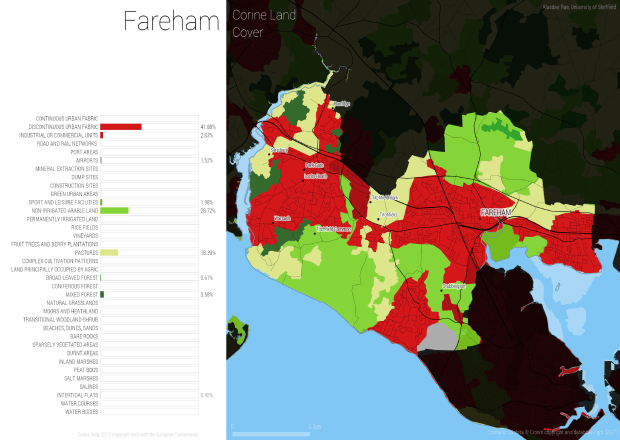
Locks Heath and the surrounding areas are greener than you think! In fact, I read that property covers less of the UK than the land revealed when the tide goes out. The assumption that vast bands of our local area have been concreted over doesn’t stand up to inspection. However, the effect of housing undoubtedly spreads beyond its actual footprint, in terms of noise, pollution and roads.
Now I am not suggesting for one second we concrete over every inch of the locality, but the bottom line is we, as a country, are growing at a quicker rate than the households we are building. I appreciate the emotional effect of housing is greater than other land use types because most of us spend the vast majority of our time surrounded by it. As Brits, we live our lives driving along roads, walking on footpaths and working and living in buildings meaning we tend, as a result, to considerably overemphasise how much of it there is.
The bottom line is Locks Heath people and the local authorities are going to have to put their weight into building more homes for people to live in. There is going to have to be some give and take on both sides, otherwise house prices will continue to rise exponentially in the future and Locks Heath youngster’s won’t be able to buy their own Locks Heath home, meaning Locks Heath rents and demand for private rented accommodation in Locks Heath can (and will) also grow exponentially.
 I miss the good old days of George Osborne as Chancellor, with his hardhat and hi-vis jacket. He must have visited every new home building site in the UK with his trademark attire! For the last few years, the nearest Philip Hammond got to donning a ‘Bob the Builder’ outfit was at his grandchild’s birthday party. However, with what appears to be a change in focus by the Tories to ensure they get back in power in 2022, they appear to have fallen in love with house building again with the Chancellor’s promise to create 300,000 new households in a year.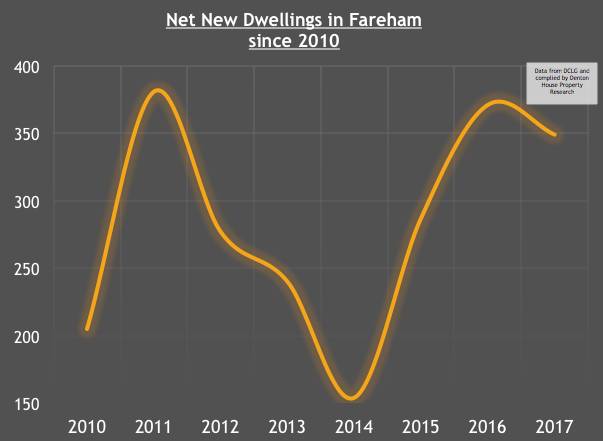
 It’s now been a good 12/18 months since annual rental price inflation in Locks Heath peaked at 3.4%. Since then we have seen increasingly more humble rent increases. In fact, in certain parts of the Locks Heath rental market over the autumn, the rental market saw some slight falls in rents. So, could this be the earliest indication that the trend of high rent increases seen over the last few years, may now be starting to buck that trend?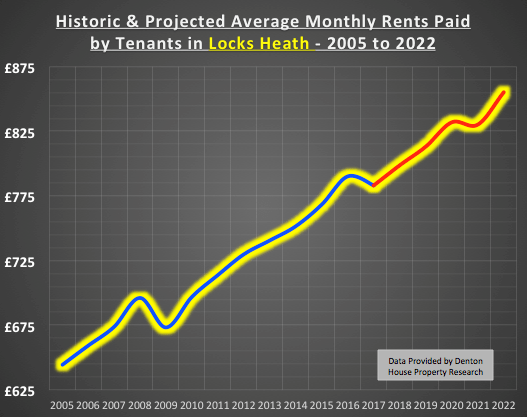
 Locks Heath homeowners will be among those affected by the latest rise in the Bank of England interest rates. The first increase in 10 years; they have just been raised from 0.25 percent to 0.5 per cent. This uplift comes as inflation hits a 51-month high of 2.9 per cent whilst the national unemployment rate is at an all-time low of 4.3 per cent.
 As the winter months draw in and the temperature starts to drop, keeping one’s home warm is vital. Yet, with the price of gas and electricity rising quicker than a Saturn V rocket and gas, oil and electricity taking on average 4.4% of a typical Brit’s pay packet (and for those Brit’s with the lowest 10% of incomes, that rockets to an eye watering 9.7%), whether you are a tenant or homeowner, keeping your energy costs as low as possible is vital for the household budget and the environment as a whole.
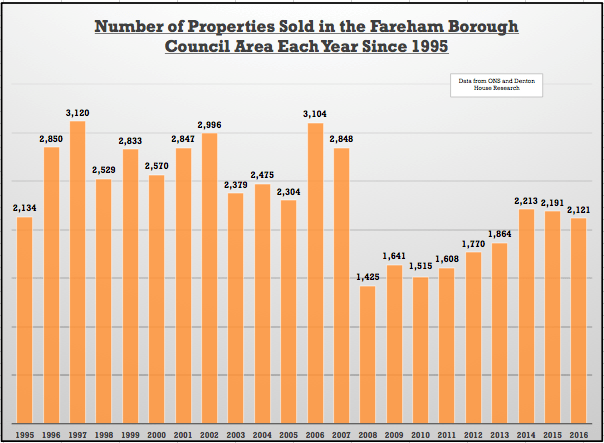
 In the credit crunch of 2008/9 the rate of home moving plunged to its lowest level ever. In 2009 the rate at which a typical house would change hands slumped to only once every 23 years. The biggest reason being that confidence was low and many homeowners didn’t want to sell their home as Locks Heath property prices plunged after the onset of the financial crisis in 2008. However, since 2009, the rate of home moving has increased (see the table and graph below), meaning today: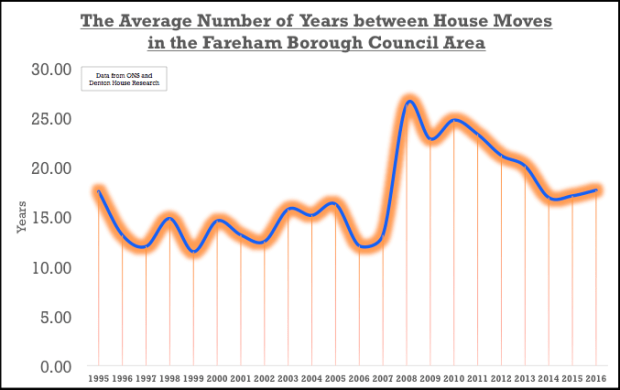
 I recently read a report by the Yorkshire Building Society that 54% of the country has seen wages (salaries) rise faster than property prices in the last 10 years. The report said that in the Midlands and North salaries had outperformed property prices since 2007, whilst in other parts of the UK, especially in the South, the opposite has happened and property prices have outperformed salaries quite noticeably.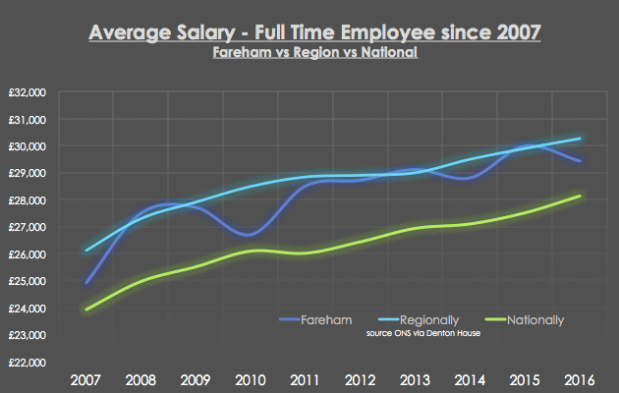

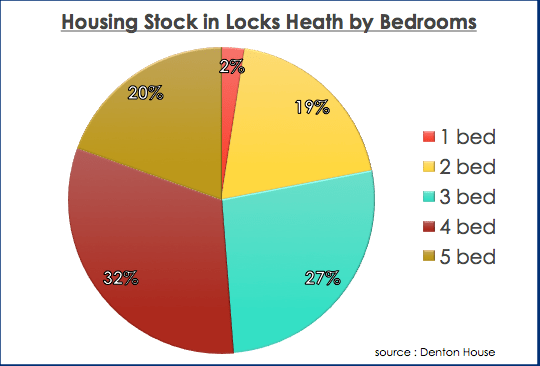
 Moving to a bigger home is something Locks Heath people with growing young families aspire to. Many people in two bedroom homes move to a three bedroom home and some even make the jump to a four bed home. Bigger homes, especially three bed Locks Heath homes are much in demand and it can be a costly move.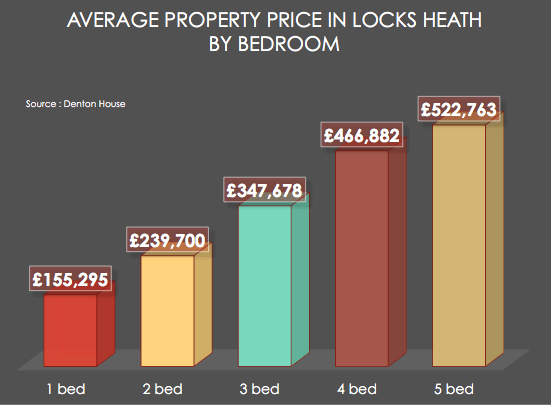
 thelocksheathpropertyblog.co.uk